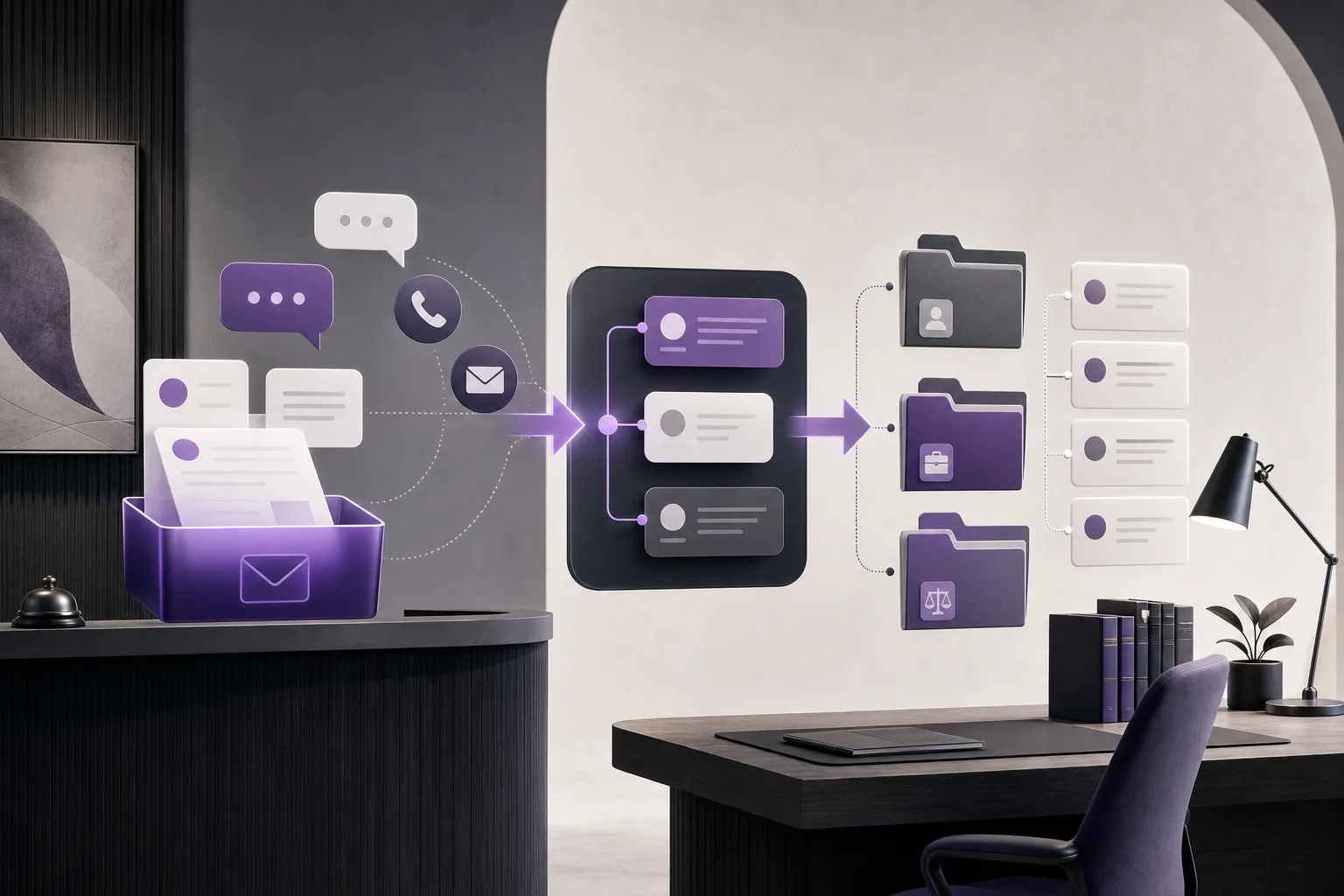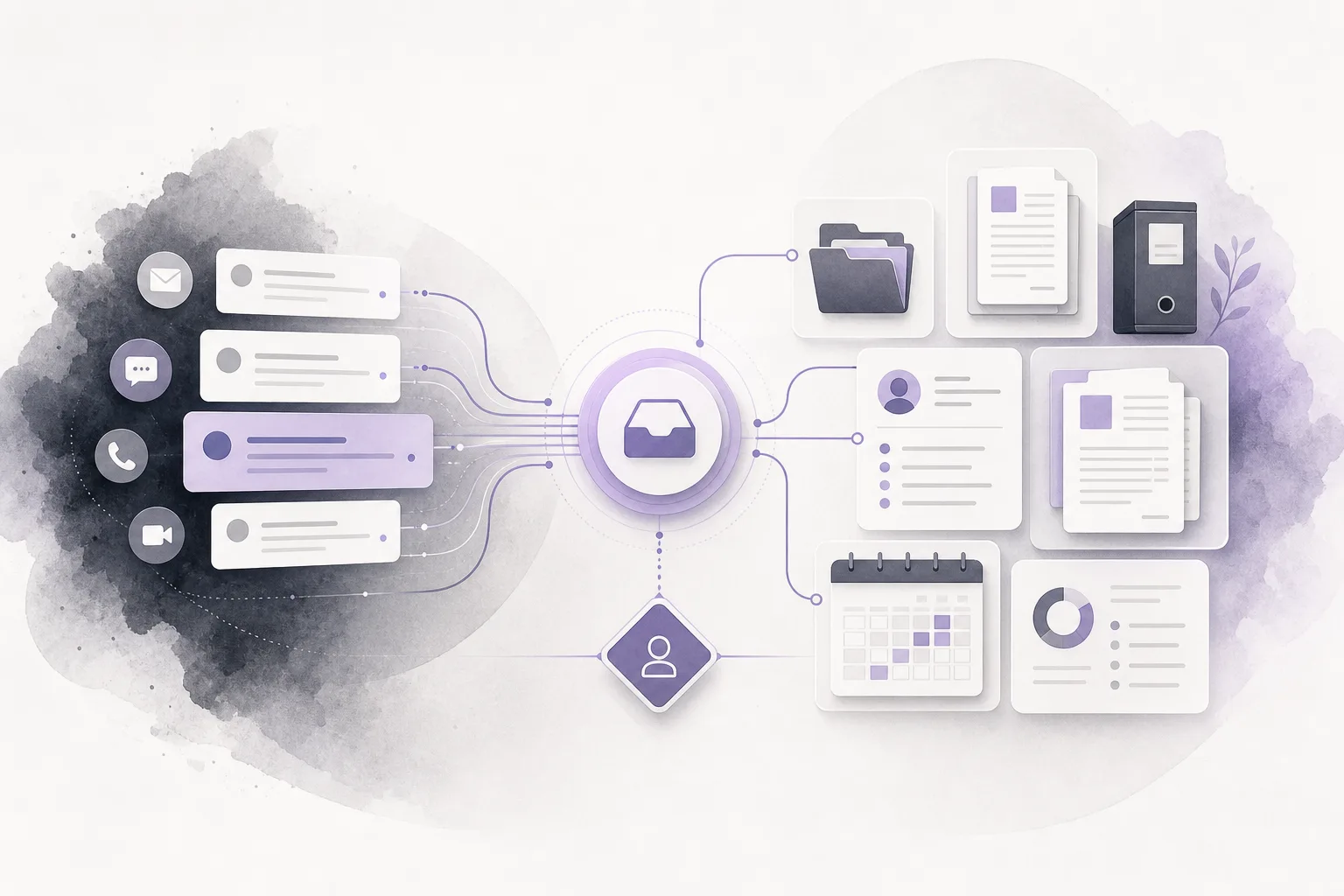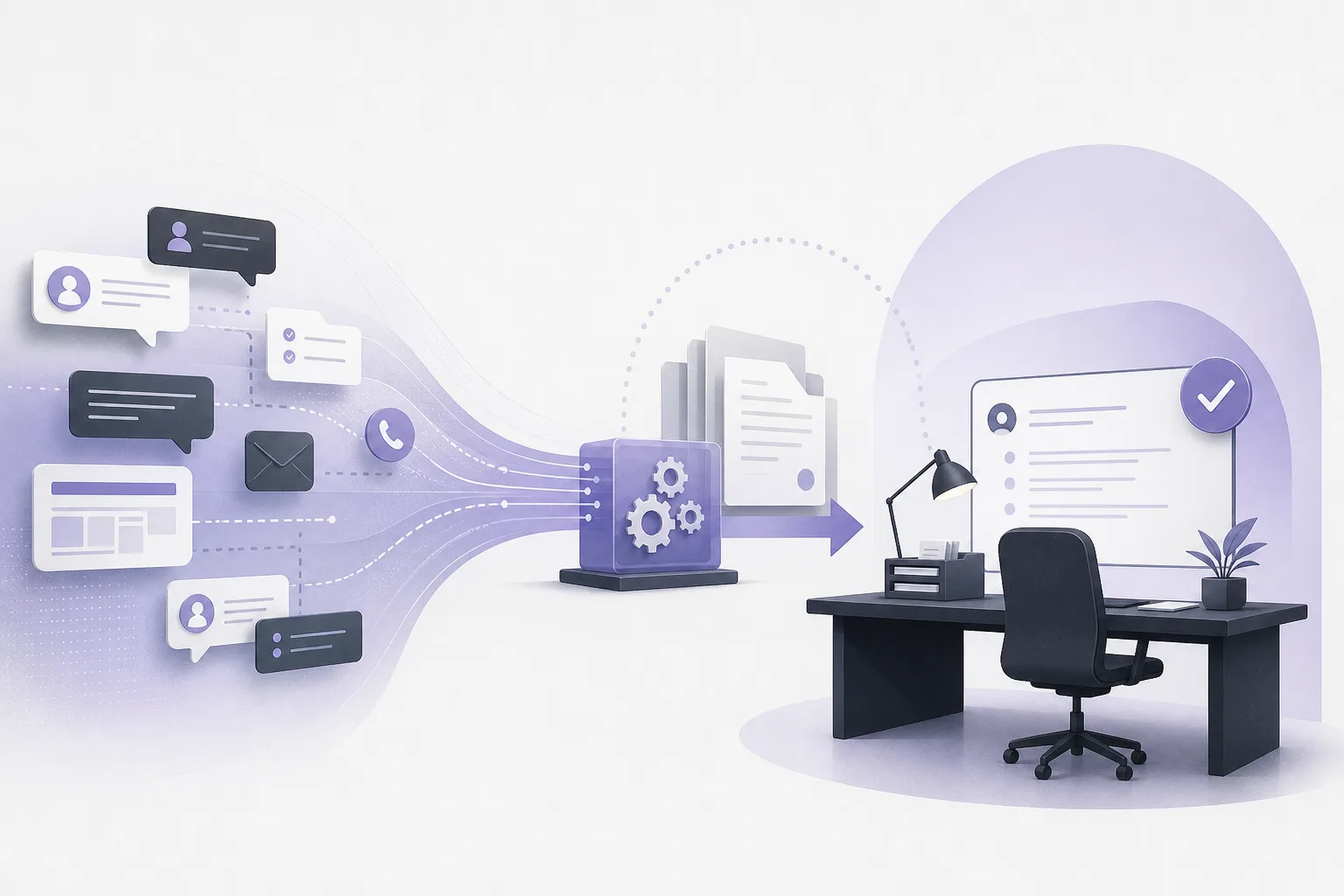
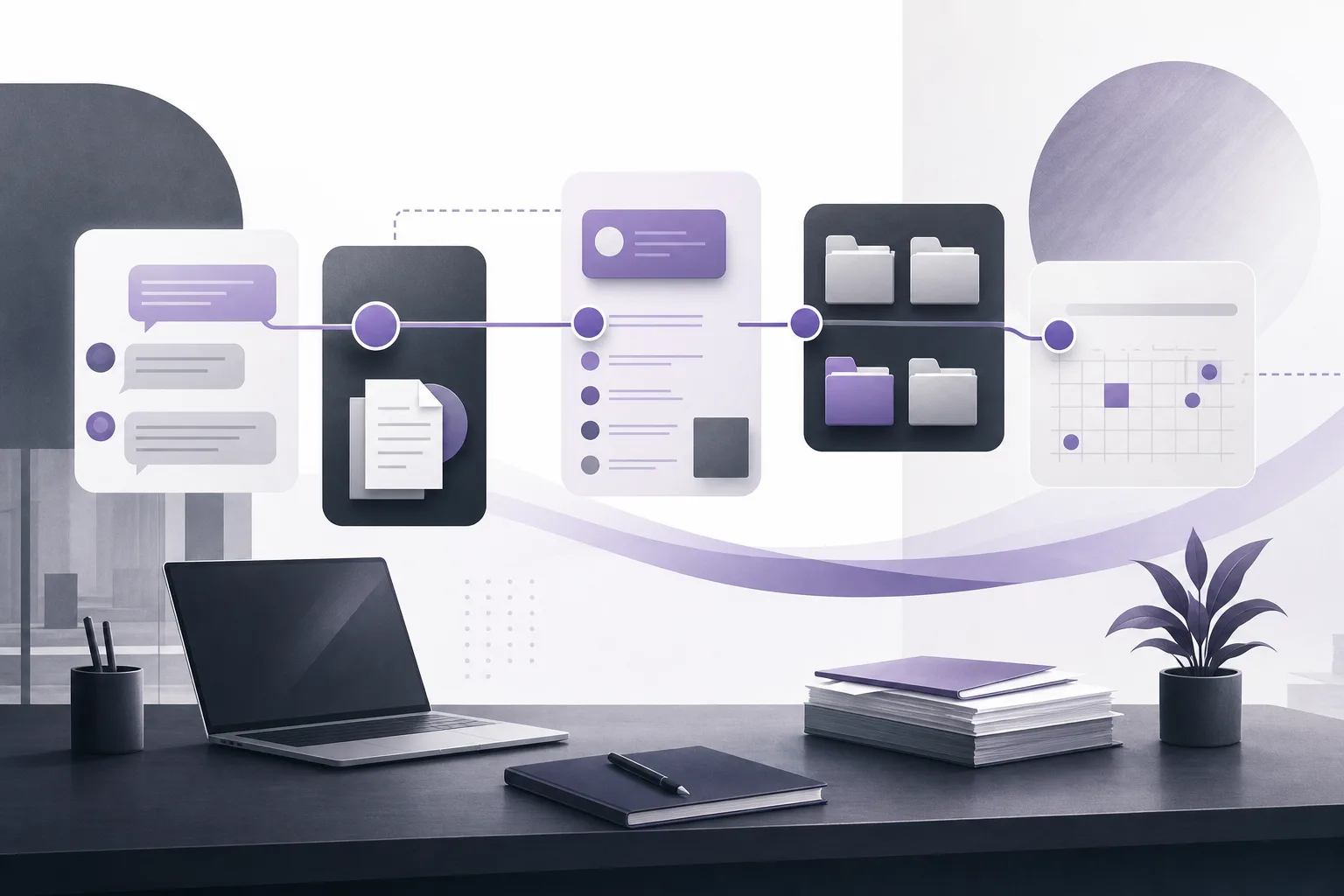
When a client returns after a conversation has been interrupted, office staff may have to ask the same questions again: What was the request about? What had already been explained? What was the client waiting for? This repetition consumes reception time and makes follow-up feel disconnected. OrderTech Legal addresses the question: How can OrderTech Legal help office staff resume a client conversation from its previous context without repeating questions? Its communication assistant can help follow the conversation context while keeping human intervention available when the situation requires it.
This is not a replacement for the receptionist’s judgment or the lawyer’s review. The assistant is an operational support tool for intake and follow-up. Its availability depends on the office edition’s configuration, the relevant channel being enabled, and the required services being connected. The resulting responses should therefore be treated as assistance that remains subject to human oversight.
Why interrupted conversations create an office workflow problem
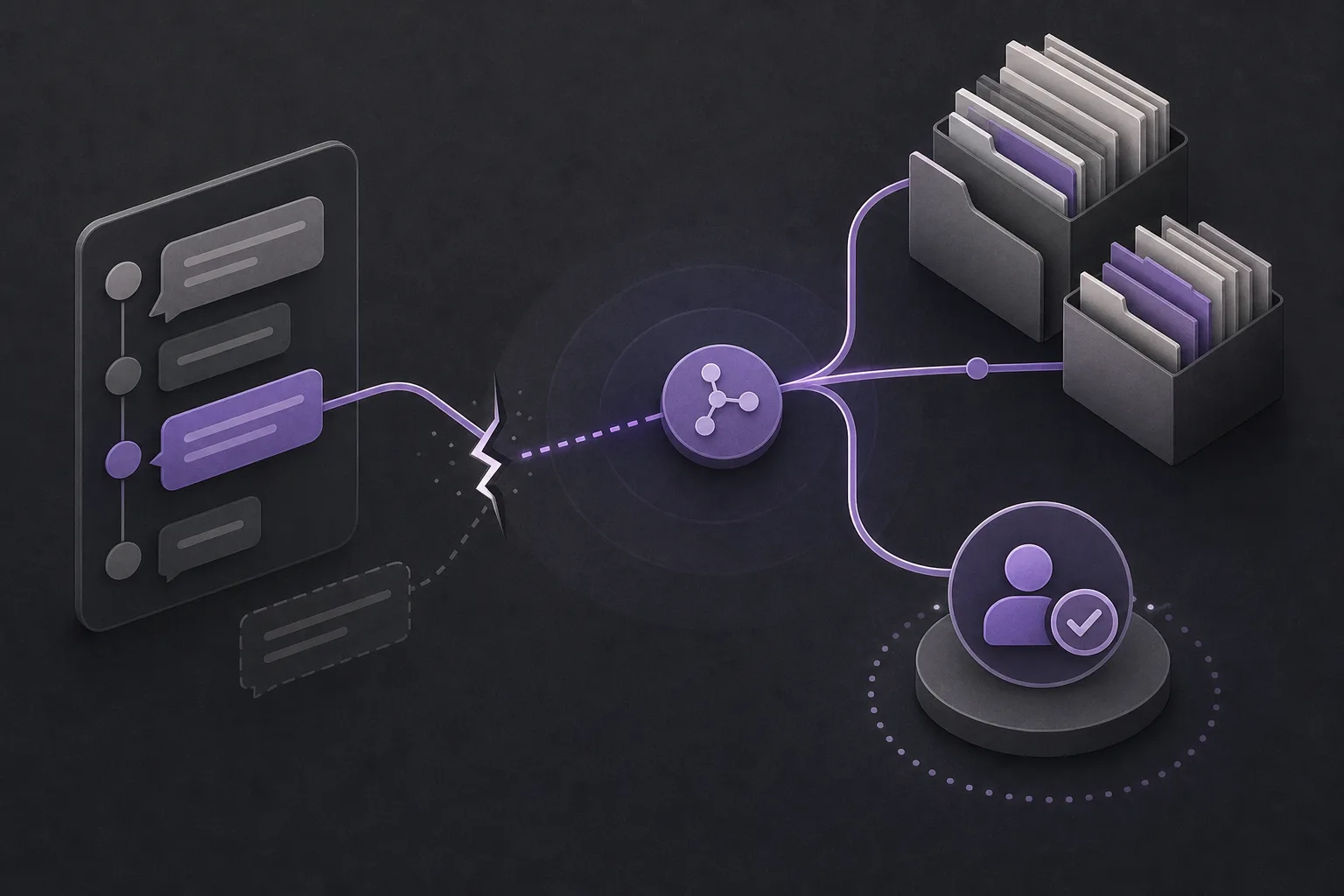
A client may begin with an initial inquiry or a frequently asked question, leave before the exchange is complete, and return later. If the earlier context is not available to the workflow, the receptionist may have to restart the intake process. That can lead to repeated questions, answers that ignore what was already discussed, or delays in understanding what the client needs now.
The issue is not limited to one communication channel. It depends on how the channel is configured within the office edition and whether the assistant has been activated for it. Even when previous context is available, the next response is not automatically sufficient for every situation. Staff may still need to clarify the current request, review the conversation, or bring in a lawyer.
How the OrderTech Legal communication assistant helps
Continuing from prior context
The communication assistant helps follow the context of an earlier conversation when the client returns. This allows a new message to be handled as a continuation of the existing exchange rather than as a completely separate inquiry. In practice, that can reduce the need to repeat introductory questions and help staff move more quickly to the point where the conversation stopped.
The benefit remains dependent on the channel and the office configuration. Not every channel or edition should be assumed to work in the same way, because availability depends on the edition setup and connected services.
Supporting inquiries and recurring questions
The communication assistant can help receive client inquiries and handle recurring questions within the scope for which it has been configured. When a client returns to an earlier conversation, the available context can help make the response more relevant to the prior exchange instead of producing a generic answer that does not reflect the conversation’s direction.
That does not mean the assistant decides what should happen in a client matter or provides a professional determination. Its role here is communication support: receiving the inquiry, following the conversation context, and helping direct the exchange. Staff or a lawyer must still verify whether the response is appropriate and decide on the next action.
Keeping human intervention available
A central part of the workflow is the ability for staff or a lawyer to intervene. If a message concerns a specific matter, requires confirmation, or should not be handled through an automated response alone, the human team can take over according to the channel configuration. This makes it possible to use assistance for recurring communication while preserving human control over situations that need closer interpretation or a professional decision.
A practical workflow for office reception staff
- Recognize the returning client: Start with the existing conversation or the enabled channel used for the earlier exchange, rather than assuming every new message is unrelated.
- Review the available context: Check the conversation sequence, the subject raised by the client, and the point at which the exchange ended.
- Classify the follow-up: If the message is a recurring or general inquiry within the channel’s configuration, the assistant may help respond. If clarification or review is needed, staff or a lawyer should intervene.
- Avoid unnecessary repetition: Ask only for information that is still necessary instead of repeating the entire initial intake simply because the conversation was interrupted.
- Confirm the next step: Before closing the exchange, check that the client received an appropriate direction and that any proposed action is understood. Where needed, human confirmation remains essential.
A hypothetical example of resuming a conversation
This is a hypothetical illustration, not a real client experience. A client starts a conversation with a law office about how to follow up on a request, but the exchange ends before the client explains what is needed next. Later, the client sends a short message referring to the earlier question and asking what to do now.
Instead of starting with the same introductory questions, the communication assistant may follow the earlier context within the enabled channel. The receptionist reviews the conversation and decides whether the available response is sufficient for a general follow-up or whether human intervention is appropriate. If the message requires a connection to a matter or a professional decision, the receptionist or lawyer takes over, using the existing context to reduce repeated questions.
The value lies in organizing the transition from intake to human review. It does not mean that the assistant knows every detail of a client matter or can make a decision for the office team.
Operational benefits for the office
- Less repetition during intake: Prior context helps staff begin at the relevant point.
- More consistent communication: A returning client can continue an existing exchange instead of starting from the beginning.
- Better use of staff time: The assistant can support recurring inquiries within its configuration, while the team focuses on cases that need intervention.
- Clearer escalation: Staff can identify when a message remains within reception support and when it should be passed to a lawyer.
- A shared office workspace: OrderTech Legal brings case and client files, documents, appointments, and accounts together in one office workspace.
Limits and points to verify
The communication assistant does not operate independently of office configuration. Availability depends on the edition setup, connected services, and whether the relevant channel has been enabled. The office should therefore verify that the intended channel and assistant are configured for the required workflow.
Following conversation context should not be interpreted as a guarantee that every message or matter detail will be fully understood. A new message may be unclear, require additional information, or call for human intervention. Staff or a lawyer should review the output and confirm proposed actions when necessary.
It is also important to distinguish the communication assistant from the office assistant. The communication assistant focuses on receiving client inquiries, handling recurring questions, and following conversation context with the possibility of human intervention. The office assistant supports file summaries, drafting, and research in the legal library, with the lawyer reviewing outputs and confirming proposed actions. Each assistant has a different scope, and the capabilities of one should not be attributed to the other.
Frequently asked questions
Does the assistant resume every conversation exactly where it stopped?
It helps follow conversation context, but the way it is available and operates depends on the channel configuration, activation, and connected services. The office should verify its own edition setup rather than assume the feature is available in every situation.
Can the assistant answer every question without staff?
No. It can support inquiries and recurring questions, with human intervention available. Staff or a lawyer remain responsible for review and for handling situations that require clarification or a decision.
Does previous context eliminate the need to verify information?
No. Context can reduce repetition and improve continuity, but it does not remove the need to verify the current request, the suitability of the response, or the next step.
Is conversation follow-up connected to office matter management?
OrderTech Legal includes case and client files, documents, appointments, and accounts in one office workspace. How communication connects with those components depends on the office edition’s configuration and the services connected to it.
Conclusion
OrderTech Legal helps office staff resume a client conversation from its earlier context through the communication assistant, reducing the need to repeat introductory questions after an interruption. The feature is most useful when the relevant channel is enabled and configured clearly, while staff or a lawyer remain available to review and intervene. If your office is looking for a more organized way to manage communication and daily workflows in one workspace, explore OrderTech Legal and assess how its configuration fits your office needs.
Platform feature references
- OrderTech Legal — إدارة المكتب / Office management — Accessed 2026-10-06
- OrderTech Legal — المساعد الذكي / AI assistance — Accessed 2026-10-06